
Learning how to create a sales funnel for beginners can feel overwhelming at first, but it becomes simple when you understand the structure. A well-planned sales funnel guides people through every stage of the customer journey. It helps you turn visitors into leads and leads into paying customers.
When you focus on smart lead generation and clear messaging, your path to growth becomes more predictable. Each step should move prospects closer to a decision. That’s how businesses steadily improve their conversion rate without guessing.
In today’s competitive market, structure matters more than luck. Using the right tools, including CRM tools, helps you track progress and nurture relationships. This approach ensures no potential customer slips through the cracks.
This step-by-step guide will show you exactly how to build, manage, and refine your funnel. You’ll learn practical strategies you can apply immediately. By the end, you’ll feel confident and ready to take action.
Most businesses waste thousands of dollars on traffic that never converts. If your visitors leave without buying, the problem isn’t traffic it’s your funnel.
What is a Sales Funnel?
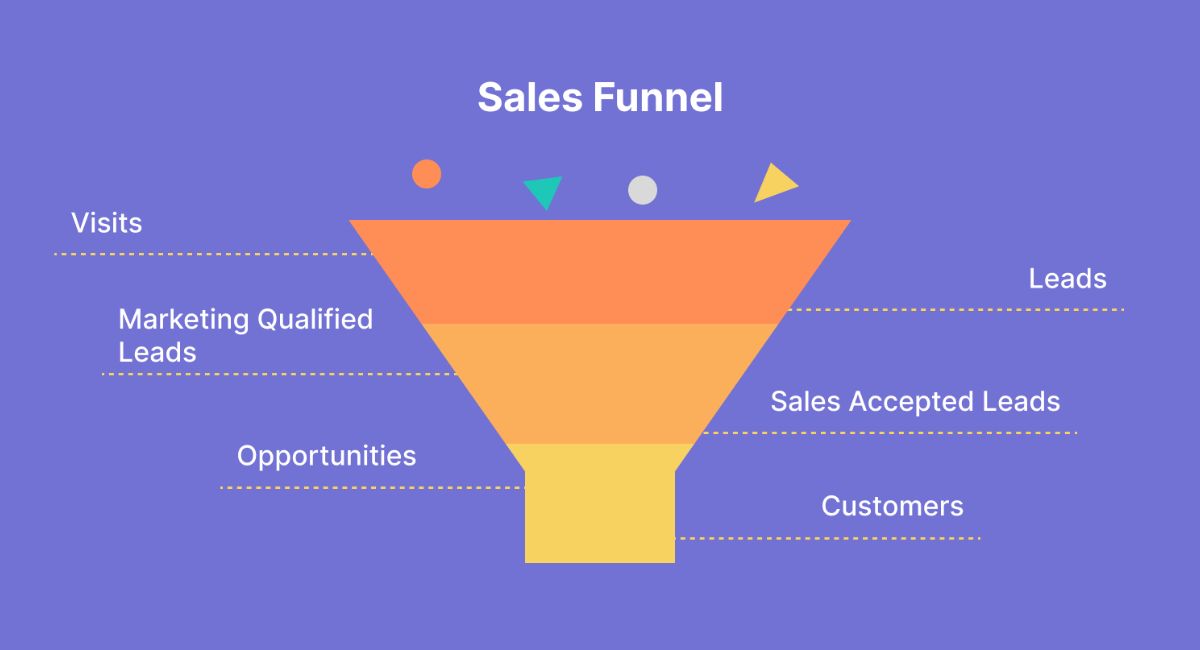
A sales funnel is a visual representation of the process potential customers go through before making a purchase. Imagine a wide top that attracts thousands of people, gradually narrowing as prospects move closer to buying. Each stage of the funnel reflects a part of the customer journey, from initial awareness to final sale and beyond. Understanding this journey allows businesses to engage leads effectively, predict conversion patterns, and optimize every step for higher revenue.
For beginners, the concept of a funnel may seem abstract. However, thinking of it as a roadmap for guiding prospects simplifies the process. By learning how to create a sales funnel, you can design marketing strategies, content plans, and sales tactics that fit each stage. The ultimate goal is not only to make a sale but also to foster loyalty and increase repeat purchases.
Why Sales Funnels Are Important for Your Business
Sales funnels are crucial because they give you a clear view of how prospects interact with your brand. Without a funnel, you might be investing resources in strategies that do not convert effectively. Funnels allow you to track metrics like conversion rate, engagement, and lead generation performance at every stage. This data is essential for funnel optimization and long-term growth.
A business that understands its funnel can align its marketing and sales teams more efficiently. CRM tools help track interactions, while email marketing keeps leads nurtured. For example, automated follow-ups ensure prospects move smoothly from consideration to decision. In essence, a strong funnel transforms a scattershot marketing approach into a predictable, measurable system for growth.
Studies show that businesses using structured sales funnels see up to 20–30% higher conversion rates compared to unstructured marketing efforts.
Additionally, companies that nurture leads generate 50% more sales-ready leads at a lower cost.
How a Sales Funnel Works: The Complete Process
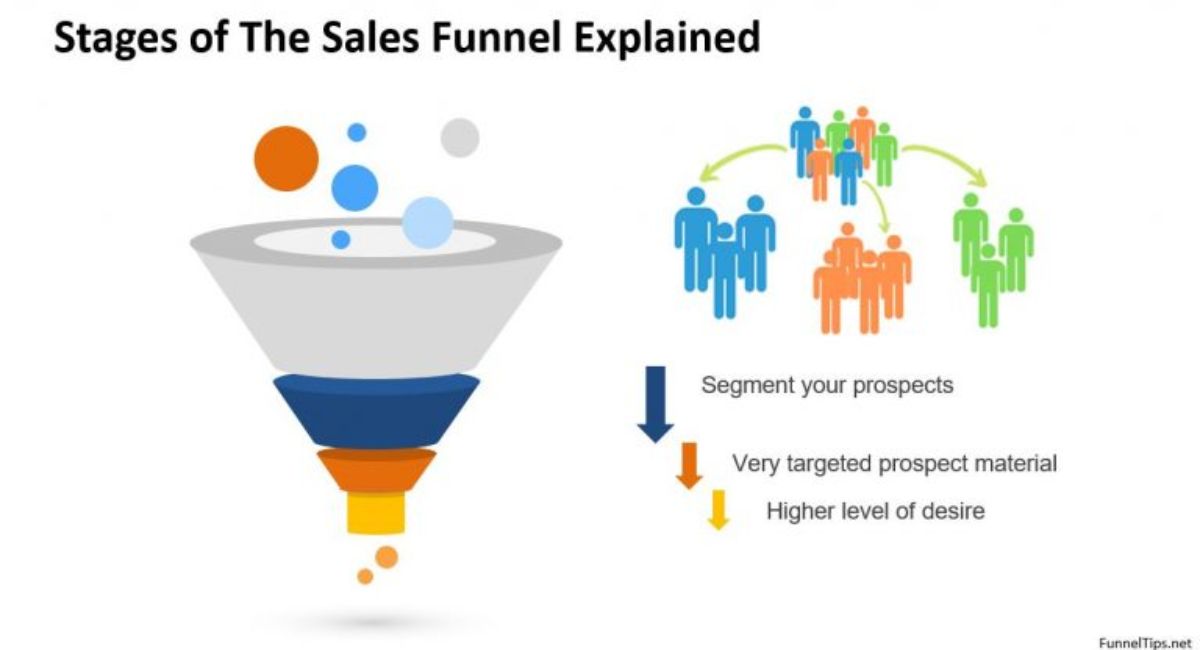
A sales funnel works by moving prospects through structured stages. At the top, you attract a broad audience through blogs, social media, SEO, or paid ads. As people show interest, you nurture them with content that educates and informs. By providing valuable information, you encourage prospects to evaluate your products or services and move closer to a purchase.
The process is continuous. Businesses use marketing automation and CRM tools to track behavior and trigger personalized actions. For example, someone who downloads a free guide might receive an email sequence offering a product demo. By analyzing engagement metrics, you can adjust content and tactics to optimise sales funnel for conversions and ensure no leads are lost.
The 6 Stages of a Sales Funnel
The six stages provide a roadmap for guiding prospects. Stage one, Awareness, attracts visitors. Stage two, Interest, engages them. Stage three, Evaluation, helps them compare solutions. Stage four, Decision, involves negotiation or persuasion. Stage five, Purchase, is where conversion happens. Finally, Stage six focuses on Retention and Upsells, encouraging repeat business.
Understanding these stages allows you to design content and campaigns that match the prospect’s mindset. You can integrate email campaigns for funnel, content marketing, and landing page strategies at each stage. Table 1 below summarizes the stages and their focus areas:
| Stage | Focus | Key Strategies |
| Awareness | Attracting leads | SEO, social media, blogs |
| Interest | Engaging leads | Newsletters, videos, guides |
| Evaluation | Educating leads | Case studies, demos, reviews |
| Decision | Converting leads | Offers, free trials, CTAs |
| Purchase | Closing the sale | Checkout optimization, upsells |
| Retention | Loyalty & renewals | Email campaigns, loyalty programs |
Stage 1: Awareness Attracting Your Audience
The Awareness stage is about letting potential customers know your brand exists. Blog posts, social media updates, and paid ads can generate attention. This stage focuses on broad visibility rather than immediate conversion. It’s essential to align your content with the audience’s interests and problems. Content ideas for funnel here include infographics, SEO-driven articles, and short videos.
At this stage, measuring metrics like page views, social shares, and click-throughs is vital. A strong awareness strategy feeds your lead generation funnel and sets up the foundation for nurturing. Using marketing automation, you can capture emails and segment audiences for future campaigns.
Stage 2: Interest Engaging Potential Leads
Once prospects are aware of your brand, the next step is to engage them. You want to show how your product or service addresses their needs. This is where educational content shines. Guides, webinars, and interactive tools help prospects understand your value proposition.
Here, email campaigns for funnel play a critical role. Automated sequences can introduce benefits, showcase reviews, and provide incentives to explore more. Engaging content increases the conversion rate as leads develop trust and readiness to move to evaluation.
Stage 3: Evaluation / Consideration Educating Leads
In the Evaluation stage, leads start comparing your offerings with competitors. Providing case studies, product demos, and testimonials helps prospects make informed decisions. Clear comparisons and honest explanations build confidence and reduce objections.
Businesses should leverage landing pages optimized for clarity and persuasion. Interactive tools like calculators or quizzes can also aid decision-making. Content marketing at this stage ensures leads see your product as the best solution. Tracking interactions via CRM tools provides insights for funnel optimization.
Stage 4: Decision / Negotiation Converting Leads
This stage focuses on closing deals. Offers like discounts, free trials, or bundled services can sway prospects. A smooth negotiation process with clear communication ensures no opportunities are lost.
Here, your B2B funnel or B2C funnel strategy must adapt. B2B deals may require longer discussions, contracts, and demonstrations, while B2C decisions can rely on fast checkout and social proof. Email marketing can reinforce urgency and finalize conversions.
Stage 5: Purchase / Sale Closing the Deal
The Purchase stage is where all efforts pay off. A seamless checkout process, multiple payment options, and clear instructions reduce friction. Landing page design plays a critical role in ensuring conversions are completed without hesitation.
After purchase, follow-up communications confirm the transaction and maintain engagement. Using CRM tools, you can track customer satisfaction and identify opportunities for upsells or cross-sells. High-performing funnels maximize conversion rate at this stage.
For effective conversions, using landing page builders like GPT Store Builder ensures your prospects have a smooth experience from interest to purchase.
Stage 6: Retention, Renewal, and Upsells
A sale isn’t the end. Retaining customers is essential for sustainable growth. Loyalty programs, personalized emails, and post-purchase support encourage repeat business. This stage enhances the lifetime value of each customer.
For B2B clients, renewal contracts and upsells are critical. For B2C, subscription models or product recommendations help. Content marketing and email campaigns for funnel keep your brand top-of-mind and nurture long-term relationships.
Content Marketing Strategies for Each Funnel Stage
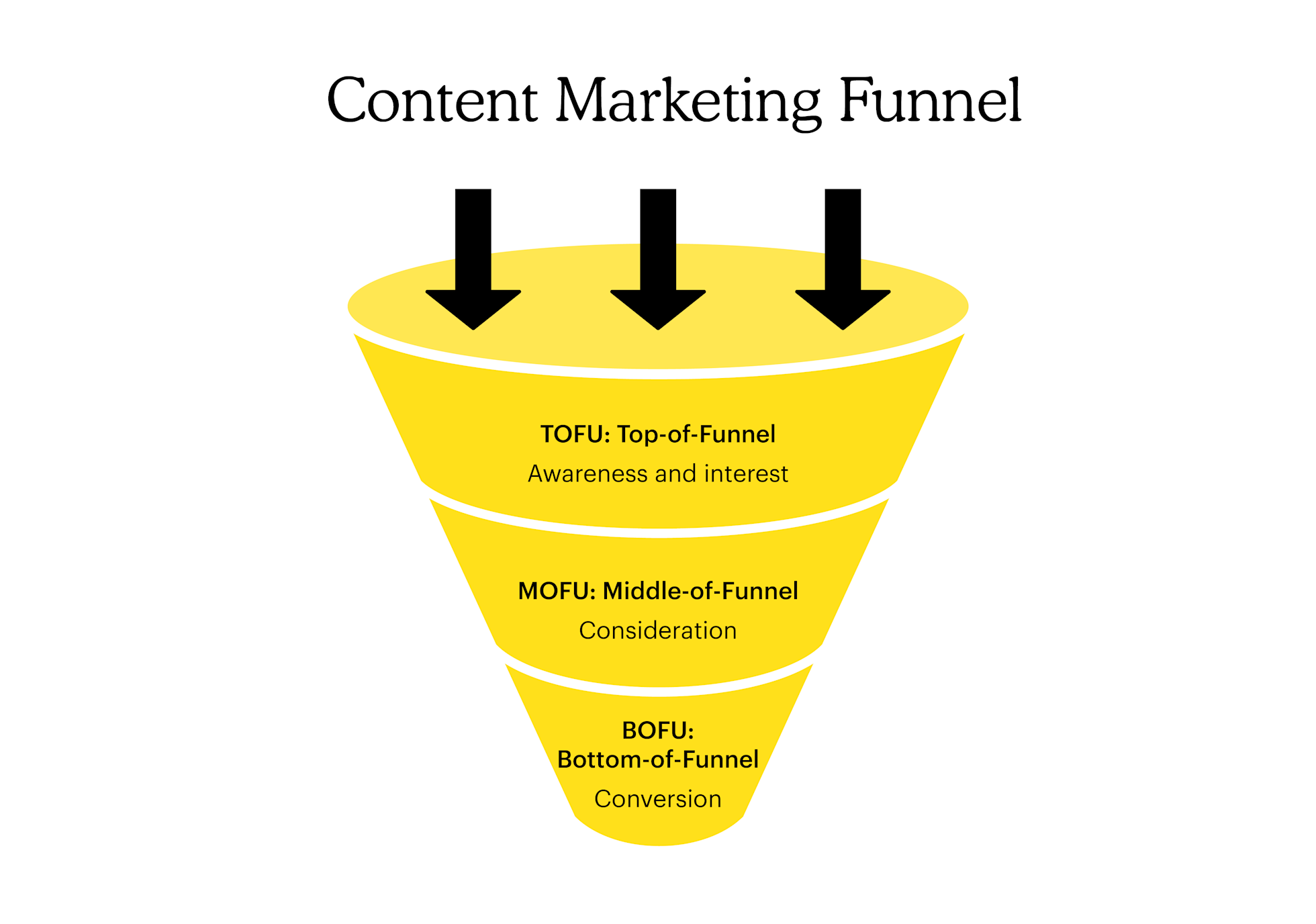
Effective content marketing aligns with each funnel stage. For Awareness, blog posts and infographics attract attention. For Interest, guides and webinars engage. During Evaluation, case studies and product demos educate. Decision stage uses offers and FAQs to convert. Retention focuses on newsletters and loyalty content to maintain connections.
Integrating marketing automation ensures timely delivery of content, while CRM tools track interactions and help refine messaging. Consistent measurement allows businesses to optimise sales funnel for conversions and adjust strategies as needed.
B2C vs B2B Sales Funnels: Key Differences
B2C funnels prioritize speed and emotion. Consumers make quicker decisions influenced by personal needs and social proof. Visual content, testimonials, and limited-time offers are highly effective.
B2B funnels involve multiple stakeholders, longer decision cycles, and ROI-focused decisions. Detailed content ideas for funnel include whitepapers, webinars, and product demos. Understanding the difference ensures tailored strategies that increase lead generation and conversion rate.
How to Define Your Ideal Customer Profile
Defining your ideal customer helps target your efforts efficiently. Analyze demographics, psychographics, and behaviors. Conduct surveys, gather feedback, and study past buyers. Define ideal customer profile clearly to align messaging and campaigns.
Use insights to design content, email sequences, and offers that resonate. Well-defined profiles reduce wasted marketing spend and improve funnel optimization by focusing on high-value leads.
Benefits of Knowing Your Ideal Customer
Knowing your ideal customer improves personalization, increases conversions, and fosters loyalty. Messaging becomes more relevant, content more engaging, and campaigns more efficient.
Businesses can track results via CRM tools, email marketing, and analytics to see which strategies work best. This understanding ensures every step of the sales funnel addresses actual customer needs.
Step-by-Step Guide to Building and Nurturing a Sales Funnel
Start by attracting visitors with content marketing and SEO. Capture leads via landing page forms. Nurture them with email sequences, social media engagement, and personalized content. As leads progress, offer demos, comparisons, and incentives to convert.
Regularly review metrics like conversion rate and engagement. Use marketing automation and CRM tools to refine your approach, continuously improving your funnel’s efficiency. Consistency is key to high-performing funnels.
Examples of High Converting Sales Funnels
Successful funnels often share patterns. E-commerce brands attract users with social media campaigns, convert through discounts, and retain customers with loyalty programs. SaaS companies use free trials, product demos, and personalized emails to move leads through their B2B funnel.
Table: Funnel Example Comparison
| Business Type | Funnel Strategy | Key Metric |
| E-commerce | Social media → landing page → email offers | Conversion rate |
| SaaS | Free trial → demo → onboarding → upsell | Lead conversion |
| Subscription | Content marketing → sign-up → retention emails | Customer lifetime value |
Case Study: Real World Funnel Success (e.g., CRED)
CRED, an Indian fintech platform, uses a highly engaging B2C funnel. Their landing page sparks curiosity rather than pushing immediate downloads. This strategy captures leads organically.
By combining sleek design, lifestyle-focused messaging, and gamified engagement, CRED achieves high retention and conversion. It’s a great example of how subtle, thoughtful funnel design can outperform aggressive tactics.
Measuring the Success of Your Sales Funnel
Track metrics like conversion rate, email engagement, and repeat purchases to understand performance. Analyze drop-off points to identify weak spots. Tools like CRM software and Google Analytics help measure results accurately.
Metrics provide actionable insights. If awareness is high but conversions low, refine content or landing pages. Measuring consistently ensures that every stage contributes to your business goals.
Optimizing Your Sales Funnel for Maximum Conversions
Optimization requires testing and refinement. A/B test landing pages, CTAs, and email sequences. Adjust content to align with audience behavior. Funnel optimization boosts lead generation and overall revenue.
Automation allows rapid changes, while analytics shows which adjustments improve conversion rate. Continuous iteration ensures your funnel remains efficient and effective.
Top Tools and Software to Build Your Sales Funnel
Tools like Salesforce, HubSpot, and Mailchimp simplify building funnels. CRM tools track interactions, marketing automation sends timely emails, and analytics track results. For small businesses, these tools save time while increasing conversions.
Choosing software that integrates lead tracking, email campaigns, and analytics is essential. Platforms that allow testing and refinement help you maintain a high-performing sales funnel.
Using marketing automation tools like Monthly DFY Suite can help track leads and streamline your email campaigns effectively.
Common Mistakes to Avoid When Building a Sales Funnel
Avoid targeting the wrong audience, neglecting content at different stages, or ignoring data. Failing to measure funnel performance or overcomplicating the process can lower conversions.
Ensure your funnel is simple, clear, and aligned with your ideal customer. Consistent testing, optimization, and engagement are essential to keep your funnel effective.
Frequently asked questions
1. What is a sales funnel and why should I create one?
A sales funnel guides prospects through the customer journey and helps businesses create a sales funnel that boosts conversions.
2. How do I start to create a sales funnel for beginners?
Begin by defining your target audience, mapping their journey, and designing content to create a sales funnel that nurtures leads.
3. What are the key stages when creating a sales funnel?
The main stages are Awareness, Interest, Evaluation, Decision, Purchase, and Retention.
4. How can I optimize a sales funnel to increase conversions?
Track metrics, test landing pages, and run email campaigns for sales funnel to improve conversion rates.
5. What’s the difference between B2B and B2C sales funnels?
A B2B funnel focuses on longer, multi-step purchases, while aB2C funnel emphasizes faster, emotion-driven decisions.
Conclusion
Learning to create a sales funnel helps beginners guide prospects through every stage of the customer journey effectively. By understanding the key funnel stages, using CRM tools, and implementing content and email campaigns for sales funnel, businesses can nurture leads, boost conversion rates, and build lasting customer relationships. Regular monitoring, testing, and optimizing each step ensures your funnel remains efficient and impactful. Following this step-by-step approach allows anyone to confidently create a sales funnel that drives results and turns prospects into loyal customers. Mastering these strategies is essential to grow and scale your business successfully.

Hi, I’m Dua I create guides, reviews, and tips to help you make money online, grow your websites, and succeed in the digital world. I test tools, hosting services, and affiliate programs so you don’t have to. Follow along to discover smart ways to earn online in 2026!”