
If you’ve ever stared at a text wondering what does a blue heart mean, you’re not overthinking it emoji symbolism really does shift depending on who’s sending it. Unlike the red heart’s loud declaration of romance, the blue heart carries a quieter, more layered message rooted in trust and calm affection. It shows up in friendships, early relationships, family chats, fan pages, and even brand posts, each time hinting at something slightly different.
Understanding its emotional meaning isn’t about memorizing one fixed rule it’s about reading context, tone, and the relationship behind the message. This guide breaks down the real-life hidden emotions, common uses, and psychological symbolism of the blue heart, so you never have to guess again.
What Does a Blue Heart Mean Quick Meaning
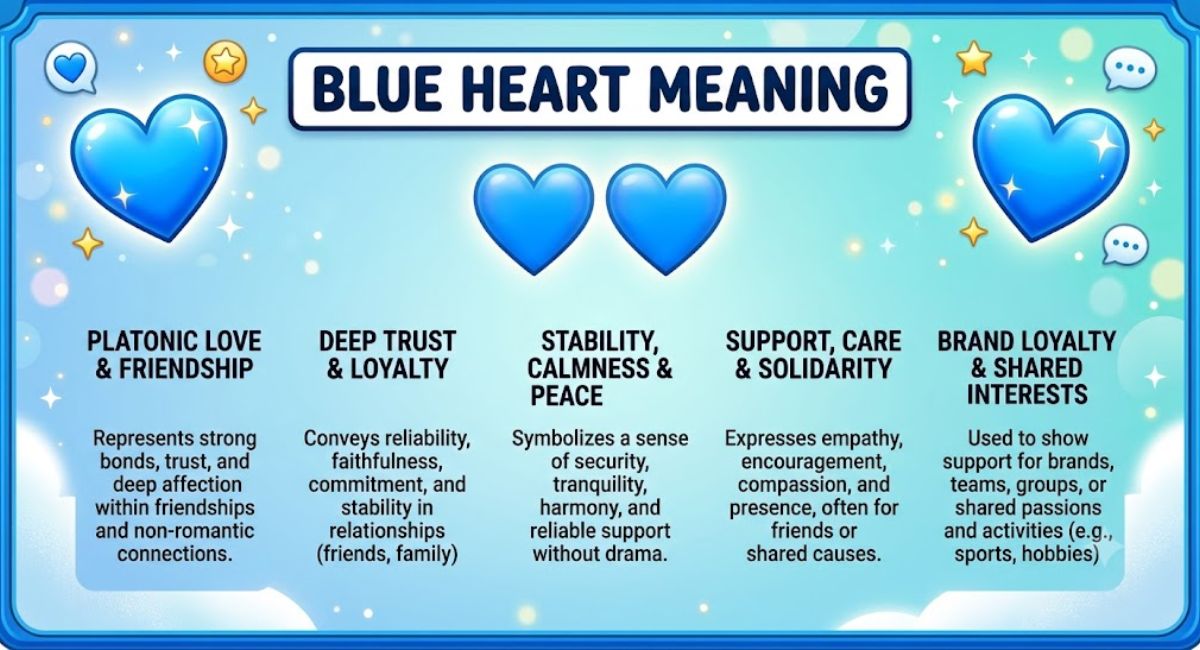
In short, the blue heart mean trust, loyalty, calmness, and platonic affection more often than romantic passion. It’s the emoji people reach for when they want to show they care, without the intensity of a red heart ❤️.
Here’s the quick breakdown of what a blue heart in most everyday situations:
Trust and reliability – “I’ve got your back.”
Calm, steady affection – Not rushed, not dramatic.
Friendship and loyalty – Common between close friends.
Support during hard times – Comfort without pressure.
Brand identity – Many companies use blue for trustworthiness.
Simple examples:
A friend texts you “miss our talks 💙” this usually means warmth and platonic love.
A guy you’re dating sends “thinking of you 💙” this could be early-stage affection that hasn’t turned romantic yet.
A brand posts “thank you for 10 years 💙” this signals loyalty and appreciation toward customers.
Origin & Background
To really understand what a blue heart mean today, it helps to know where it came from.
See also What Does HB Mean in Text? 10 Surprising Real Meanings, Examples & Social Media Use
The Blue Heart emoji 💙 was introduced as part of Unicode 6.0, a 2010 update to the universal text and character encoding standard maintained by the nonprofit organization Unicode. It’s essentially a blue-colored version of the Red Heart emoji, which itself traces back to non-colored digital heart symbols that originated in Japanese mobile technology during the late 1980s and 1990s.
Today, the blue heart sits alongside a full family of colored heart emoji including the Red Heart, Pink Heart, Orange Heart, Yellow Heart, Green Heart, Light Blue Heart, Purple Heart, Brown Heart, Black Heart, Grey Heart, and White Heart. While each color carries its own flavor, all heart emoji are widely used across digital communication to express affection, gratitude, happiness, and support in broadly similar ways.
What makes blue unique is the psychology behind the color itself. Across cultures, blue is tied to the sky and the ocean vast, calm, and dependable. That’s a big reason why the blue heart mean something steadier and less “fiery” than red.
Real-Life Conversations (How People Actually Use It)
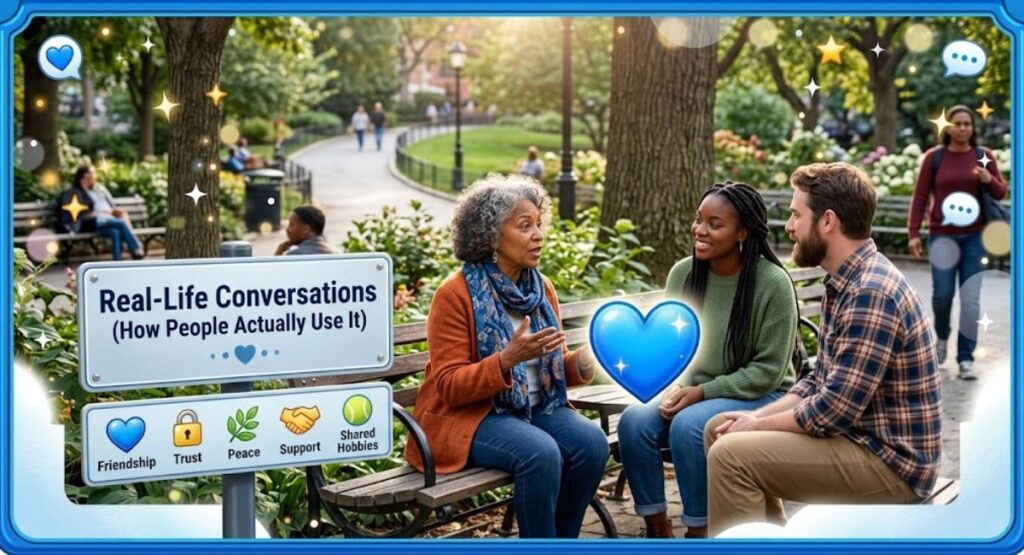
Theory is one thing, but real conversations show the clearest picture of what a blue heart. Here’s how it plays out in actual texting culture:
Best friend texts: “You always know what to say 💙” pure platonic love.
New relationship texts: “Had so much fun today 💙” affection that’s warm but not yet declaring full romance.
Family group chat: “Love you all 💙” comfort and closeness.
Coworker message: “Thanks for covering my shift 💙” gratitude with a friendly, professional tone.
Fan comment under a celebrity’s post: “Forever supporting you 💙” loyalty and admiration.
Notice the pattern almost none of these are aggressively romantic. That’s the core of what a blue heart mean in casual, real-world texting: warmth without intensity.
Emotional & Psychological Meaning
Color psychology plays a huge role in why people instinctively reach for this emoji. Blue is consistently linked with calmness, stability, and intelligence in psychological studies on color perception.
So emotionally, the blue heart mean:
Inner peace sending it can feel calming, both to the sender and receiver.
Emotional safety it signals “you can trust me” rather than “I’m infatuated with you.”
Quiet, steady love the kind that builds slowly instead of burning fast.
Empathy and comfort frequently sent during tough times, breakups, or grief.
This is also why mental health communities and support groups have embraced the symbol. Many people understand it as a symbol of loyalty and friendship, though others may read it as more distant or reserved compared to the passionate red heart which is a fair point, and one reason context always matters more than the emoji alone.
Usage in Different Contexts
The blue heart mean different things depending on where and how it’s used. Let’s break it down by platform and relationship type.
In Texting & Messaging
A blue heart in a text usually signals genuine, non-pressuring affection. It’s common between:
Close friends
New couples easing into a relationship
Family members
Long-distance partners who want comfort over passion
On Social Media (Instagram, TikTok, Twitter/X)
On social platforms, the blue heart mean support, solidarity, or fandom. It is especially popular among younger users on platforms like Instagram and TikTok in posts related to mental health awareness, friendship goals, and community support.
In Branding & Marketing
Brands love blue for a reason it reads as dependable. A blue heart emoji is commonly used by brands as a neutral heart color, often to express affinity or appreciation for things connected to that color. Sports teams, water-conservation campaigns, and healthcare organizations frequently use it this way.
In Friendships
Between friends, a blue heart mean exactly what it looks like loyalty, appreciation, and a “no romantic strings attached” type of love.
In Romantic Relationships
Here’s where it gets tricky. Some partners use blue hearts purely as a personal favorite color, not a downgrade from red. Always consider the full conversation, not just the emoji.
Common Misunderstandings
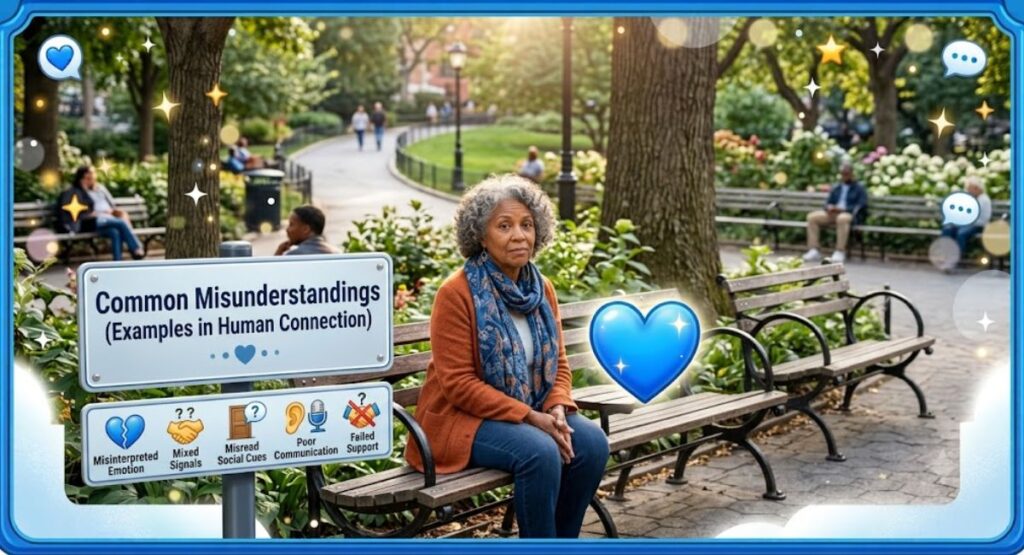
Because emoji meanings aren’t official or fixed, confusion is common. Here are the biggest myths about what a blue heart mean:
See also What Does OMS Mean in Text? It Really Means & How to Use It in 2026 Complete Guide
❌ “It always means they’re not really into you.” Not true many people simply prefer blue or associate it with calm affection rather than friend-zoning.
❌ “It’s only for friendship, never romance.” Plenty of couples use blue hearts as their signature emoji.
❌ “It replaces the red heart when interest fades.” Sometimes, but this is usually visible through other behavior changes too — not the emoji alone.
❌ “Brands use it just because it looks nice.” Often it’s a deliberate trust-building color choice.
The real takeaway: the blue heart different things to different people, so tone, history, and consistency in the conversation matter more than the symbol by itself.
Comparison Table
| Heart Emoji | Color Symbolism | Common Meaning |
| ❤️ Red Heart | Passion, romance | Deep love, intense emotion |
| 💙 Blue Heart | Calm, trust | Loyalty, friendship, steady affection |
| 💛 Yellow Heart | Happiness | Friendship, joy |
| 💚 Green Heart | Nature, growth | Health, environment, jealousy (slang) |
| 🧡 Orange Heart | Warmth | Encouragement, platonic care |
| 💜 Purple Heart | Compassion | Sympathy, support, sometimes romance |
| 🤍 White Heart | Purity | Innocence, new beginnings |
| 🖤 Black Heart | Dark humor | Sarcasm, grief, edgy affection |
Variations / Types of Blue Heart Meaning
Not every blue heart is identical anymore. Unicode has expanded the blue family, which adds nuance to what a blue heart mean today:
💙 Classic Blue Heart trust, loyalty, calm affection.
🩵 Light Blue Heart softer, often linked to gentleness, sincerity, and even autism-awareness symbolism. It was approved as part of Unicode 15.0 and added to Emoji 15.0 in 2022.
Navy/dark blue tones in branding used for authority and professionalism.
Blue heart combos (💙🧡, 💙💚) often used for sports teams, fandoms, or specific causes.
How to Respond When Someone Uses It
Not sure how to reply to a blue heart text? Here’s a simple guide:
If it’s a friend: Send one back, or reply “💙 love you too” keeps the tone warm and uncomplicated.
If it’s someone you’re dating: Match the energy. A simple “💙” or a kind comment works fine without overanalyzing.
If it’s a brand or public account: A like or short comment is enough no need to overthink it.
If you’re unsure of the intent: Ask casually, like “aww, blue heart vibes today?” It opens the door without pressure.
The golden rule: don’t panic over one emoji. The blue heart warmth in 9 out of 10 everyday situations.
Regional & Cultural Usage
Emoji meanings can shift depending on culture and region:
See also What Does SMD Mean in Text? 7 Shocking Real Meanings & Origins Explained
Western countries (US, UK, Europe): Mostly platonic, supportive, or “calm romance.”
South Asia: Frequently used to show admiration for celebrities, sports stars, or causes.
Africa: Online discussions show people debating its romantic versus platonic meaning, especially in relationship contexts, as seen in popular social threads where users discuss what the blue heart stands for compared to the more serious red heart.
K-pop and fandom culture: Blue hearts are sometimes tied to specific group colors, representing fan loyalty rather than personal romance.
This regional variety is exactly why understanding what a blue heart mean requires looking at the sender’s habits and culture, not just the symbol.
Examples of the Blue Heart emoji 💙
To make this practical, here are real-style examples across different situations:
“You’re my person 💙” deep platonic or romantic trust.
“Stay strong, we’re with you 💙” comfort during hard times.
“Go Dodgers! 💙” team loyalty.
“Thank you for trusting us with your business 💙” brand gratitude.
“Miss you, call me later 💙” gentle, caring check-in.
Where does the Blue Heart emoji 💙 come from?
As covered earlier, the Blue Heart emoji became part of Unicode 6.0 in 2010, evolving from the original red heart symbol used in early Japanese mobile messaging. It was created simply as a color variant, but over the past decade, internet culture has layered it with deeper, more specific emotional meaning proof that emoji symbolism is shaped by users, not just designers.
How is the Blue Heart emoji 💙 used?
In everyday digital communication, the blue heart mean and represents:
A safe, low-pressure way to express affection.
A loyalty marker among friends and fans.
A trust signal in business and branding.
A comfort symbol during emotional conversations.
A personal style choice for people who simply love the color blue.
Like other color-based hearts, it’s also frequently used to express appreciation for people, places, or ideas connected to that same color meaning sometimes a blue heart really is just about liking the color blue, nothing deeper required.
Frequently Asked Questions
Does a blue heart mean someone likes you romantically?
It can, but it more often signals calm, trusting affection rather than romantic passion context and consistency matter more than the emoji alone.
Is a blue heart better than a red heart?
Neither is “better” red heart leans romantic and intense, while blue heart leans loyal and calm; the right one depends on the relationship.
Why do guys send a blue heart instead of red?
Many men use blue hearts to show genuine care without rushing into romantic labels, or simply because blue is their favorite color.
What does a blue heart mean on Snapchat or Instagram?
On social platforms, it usually signals friendship, fan loyalty, or support for a cause rather than a specific romantic relationship.
Can a blue heart mean friendship only?
Very often it’s one of the most common emoji for platonic love, gratitude, and close friendship bonds.
Final Thoughts
So, what does a blue heart mean at the end of the day? It’s rarely about intensity and almost always about trust, calm affection, loyalty, and genuine care whether that’s between friends, new couples, families, or even brands and their customers.
The next time you see a 💙 pop up in your messages, don’t overanalyze it. Look at the full conversation, the person’s usual style, and the context around it. More often than not, the blue heart mean exactly what it feels like: quiet, steady, real affection.

Hi, I’m Dua I create guides, reviews, and tips to help you make money online, grow your websites, and succeed in the digital world. I test tools, hosting services, and affiliate programs so you don’t have to. Follow along to discover smart ways to earn online in 2026!”